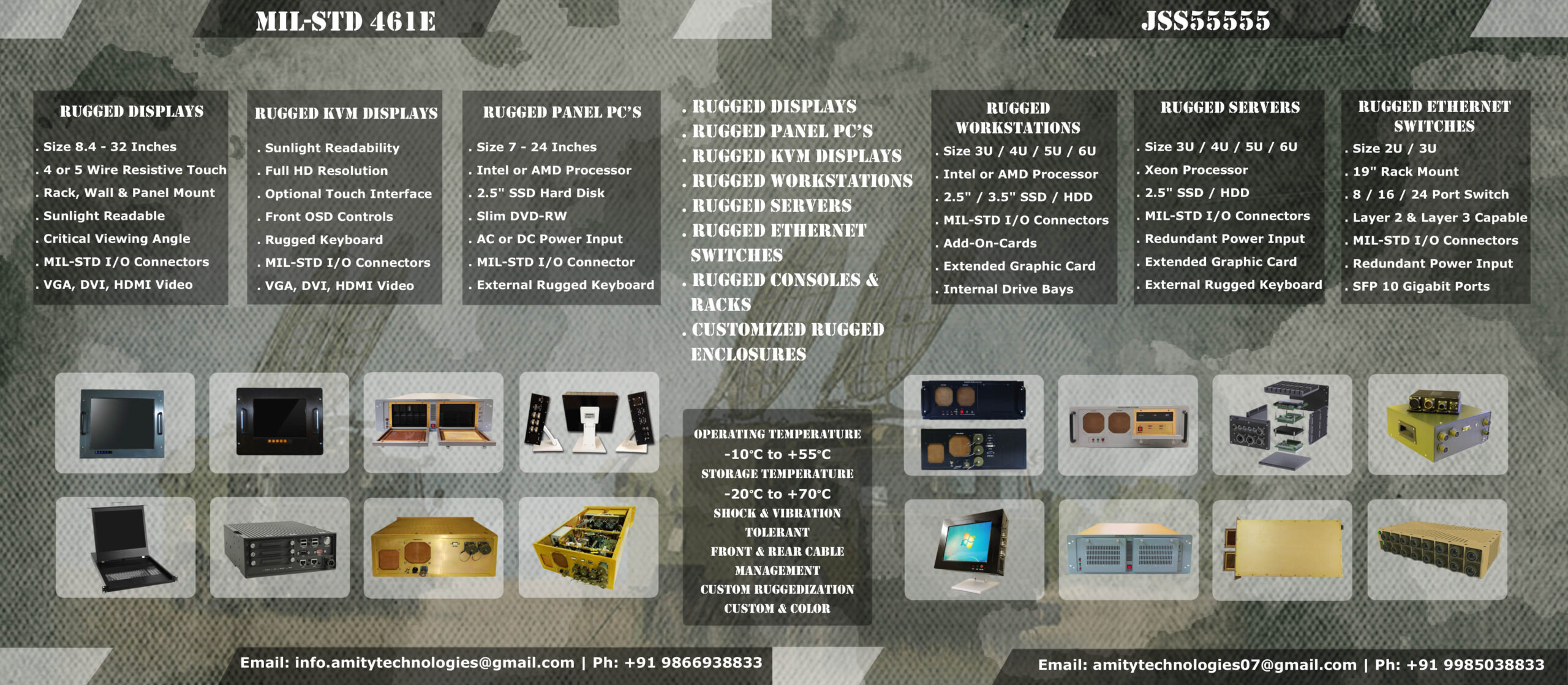
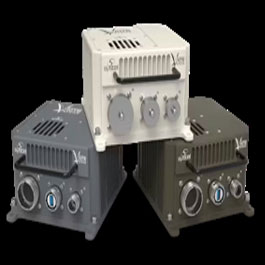
Why Ruggedization Matters: Designing Electronics for Harsh Battlefield Environments

In modern warfare, technology is as critical as weaponry. From communication systems and drones to surveillance equipment and portable computing devices, electronics play a pivotal role in mission success. But the battlefield is not a friendly environment—dust, moisture, extreme temperatures, shock, and electromagnetic interference can quickly destroy unprotected devices. That’s where ruggedization comes in.

What is Ruggedization?

Ruggedization is the process of designing and manufacturing electronic systems that can withstand extreme environmental and operational conditions without compromising performance. This involves selecting specialized materials, implementing protective designs, and adhering to strict military-grade testing standards.

Challenges in Battlefield Electronics

Battlefield environments present unique challenges that standard consumer electronics simply cannot handle:

  • Extreme Temperatures – From sub-zero conditions in high-altitude zones to scorching desert heat.
  • Shock & Vibration – Resulting from transport in armored vehicles, rapid deployment, or weapon recoil.
  • Dust & Sand – Microscopic particles that can infiltrate and damage sensitive components.
  • Humidity & Water Exposure – Including heavy rain, fog, and accidental submersion.
  • Electromagnetic Interference (EMI) – From nearby military equipment and communication systems.

Key Ruggedization Strategies

  1. Durable Enclosures
    Using military-grade metals, reinforced plastics, and sealed casings to protect electronics from mechanical stress and contamination.
  2. Thermal Management
    Incorporating heat sinks, advanced cooling systems, and temperature-resistant components to operate in extreme heat or cold.
  3. Shock & Vibration Isolation
    Employing shock mounts, dampers, and PCB reinforcement to prevent component damage.
  4. Waterproofing & Sealing
    Achieving high IP (Ingress Protection) ratings through gaskets, conformal coatings, and sealed connectors.
  5. Electromagnetic Shielding
    Using conductive coatings, metal housings, and EMI filters to ensure stable performance in high-interference zones.
  6. Compliance with Military Standards
    Following MIL-STD-810 for environmental durability and MIL-STD-461 for EMI/EMC compliance.

Why Ruggedization is Mission-Critical

In battlefield operations, equipment failure can lead to mission delays, compromised safety, or even loss of life. Ruggedized electronics ensure:

  • Operational Reliability – Devices perform consistently under harsh conditions.
  • Longer Service Life – Reduced maintenance and replacement needs.
  • Enhanced Mobility – Soldiers can carry and deploy devices without extra protective gear.
  • Mission Readiness – Technology is available and functional when needed most.

The Future of Ruggedized Electronics

With the rise of autonomous drones, wearable soldier tech, and real-time battlefield data systems, ruggedization is evolving to integrate lighter materials, advanced coatings, and AI-powered self-diagnostics. Future battlefield electronics will not only survive harsh environments but also adapt to them.


Final Thought:

Ruggedization is not an optional feature—it is the backbone of reliable battlefield technology. As warfare becomes more technologically driven, the ability to design and deliver electronics that thrive in the harshest conditions will remain a decisive advantage.
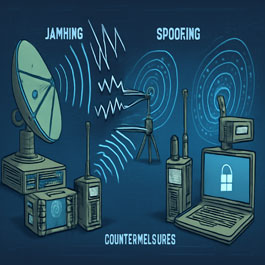
Understanding Electronic Warfare (EW): Jamming, Spoofing & Countermeasures

In today’s digital battlespace, Electronic Warfare (EW) has emerged as a pivotal force multiplier in modern military operations. No longer confined to traditional kinetic engagements, warfare now extends to the electromagnetic spectrum—a domain where signals are as crucial as soldiers, and disruption can be as powerful as destruction.

This article delves into the core concepts of EW, focusing on jamming, spoofing, and the countermeasures developed to defend against them.


What is Electronic Warfare (EW)?

Electronic Warfare is the use of the electromagnetic spectrum (EMS)—radio waves, infrared, microwave, and more—to detect, intercept, disrupt, deceive, or disable an enemy’s communications, navigation, and radar systems. EW is divided into three broad categories:

  1. Electronic Attack (EA) – using EMS to degrade, neutralize, or destroy enemy capabilities.
  2. Electronic Protection (EP) – safeguarding friendly systems against EW attacks.
  3. Electronic Support (ES) – detecting and identifying EMS signals to gain situational awareness.

Jamming: Disrupting the Signal

What is Jamming?

Jamming refers to intentionally transmitting radio signals to interfere with the reception of legitimate signals. The goal is to degrade or completely block communication, radar, or navigation systems.

Types of Jamming:

  • Spot Jamming: Targets a single frequency.
  • Barrage Jamming: Covers a range of frequencies simultaneously.
  • Sweep Jamming: Rapidly shifts across multiple frequencies.
  • Deceptive Jamming: Mimics legitimate signals to confuse receivers.

Real-World Applications:

Jamming is widely used to suppress enemy radars, GPS signals, and communication channels, often during aerial, naval, or ground operations. For instance, disrupting GPS during missile targeting can prevent accurate strikes.


Spoofing: Deceiving the Receiver

What is Spoofing?

Spoofing involves sending false or misleading signals to deceive a system. Instead of blocking a signal like jamming, spoofing tricks a receiver into accepting fake data as legitimate.

Common Targets:

  • GPS Spoofing: Alters navigation data, redirecting vehicles or drones.
  • Radar Spoofing: Creates ghost targets or hides real ones.
  • Communication Spoofing: Sends false commands or disrupts coordination.

Notable Incidents:

One of the most cited spoofing events was the alleged hijacking of a U.S. drone in 2011, where GPS spoofing is believed to have led it astray. The technology is also a growing concern in cybersecurity and autonomous vehicles.


Countermeasures: Defending the Spectrum

1. Frequency Hopping Spread Spectrum (FHSS):

Changes frequencies in a synchronized pattern, making it harder for jammers to keep up.

2. Anti-Jam GPS (AJ-GPS):

Uses advanced filtering and directional antennas to resist jamming and spoofing.

3. Adaptive Filters & AI Algorithms:

Detect unusual patterns in signals to identify spoofing attempts in real time.

4. Encryption & Authentication:

Secure communication protocols ensure only legitimate signals are accepted.

5. Spectrum Monitoring & Management:

Real-time scanning helps identify EW threats and adjust frequencies dynamically.


The Future of EW: Smarter, Faster, Autonomous

As technology advances, EW systems are becoming more autonomous and AI-driven, capable of detecting and responding to threats without human intervention. Countries are investing heavily in next-generation EW systems that can operate in complex and contested environments like cyber-EW convergence, drone swarms, and space-based electronic warfare.


Conclusion

Electronic Warfare is a silent, invisible battleground—yet its outcomes can tip the scales of a conflict. From jamming enemy radars to spoofing navigation systems, EW offers both offensive and defensive capabilities that are integral to modern defense strategy. As threats evolve, so too must our understanding and innovation in this critical field.

Whether you’re a defense professional, a student, or a curious mind, understanding EW is essential to grasp how wars are fought—and won—in the 21st century.

Radar Systems: How They’re Evolving for Modern Threat Detection

Radar technology has come a long way since its pivotal role in World War II. What began as a means to detect incoming aircraft has transformed into a sophisticated system capable of tracking hypersonic missiles, stealth aircraft, drones, and even cyber threats. As global security concerns grow more complex and adversaries develop smarter tactics, radar systems must evolve to keep pace. Let’s dive into how radar systems are adapting and advancing for modern threat detection in today’s dynamic battlefield and defense environments.


The Traditional Radar: A Quick Recap

Classic radar systems operate by sending out radio waves and detecting the reflections from objects like aircraft or ships. The time delay and frequency shift of the returned signal help determine an object’s distance, speed, and direction. While effective for decades, these systems were limited in resolution, struggled with clutter (like birds or weather), and had difficulty identifying stealth or low-RCS (Radar Cross Section) targets.


The Modern Threat Landscape

Today’s threats are not only more varied but also more difficult to detect. Some of the challenges include:

  • Stealth technology: Aircraft and missiles designed to evade radar detection using shape and materials.
  • Hypersonic weapons: Traveling at speeds above Mach 5, these weapons reduce the time radar has to detect and respond.
  • Swarm drones: Dozens or hundreds of small drones moving together to overwhelm traditional detection systems.
  • Cyber-electronic warfare: Enemies may jam or spoof radar systems to mislead or blind them.

Key Innovations in Radar Technology

To stay ahead, radar systems are undergoing a technological transformation. Some of the major advancements include:

1. Active Electronically Scanned Arrays (AESA)

Unlike older radars that rotate mechanically, AESA radars use numerous small antennas to steer beams electronically. This allows for faster scanning, multi-target tracking, and resistance to jamming.

  • Benefits:
    • High-resolution imaging
    • Multi-functionality (search, track, fire control)
    • Lower probability of interception

2. Cognitive Radar

These smart radars use AI and machine learning to adapt in real-time to changing environments and threats. They learn from past encounters to improve detection, classification, and tracking.

  • Applications:
    • Recognizing unknown or disguised threats
    • Filtering out clutter or false alarms
    • Dynamically changing waveforms to counter jamming

3. Passive Radar

Instead of emitting signals, passive radars use existing electromagnetic signals (like FM radio or TV) to detect objects. They are difficult to detect and don’t reveal their presence to enemies.

  • Ideal for: Urban environments or stealth operations

4. Multistatic Radar Networks

Instead of a single transmitter-receiver unit, multistatic systems use multiple separated transmitters and receivers. This creates overlapping coverage and makes it harder for stealth objects to evade detection.

5. Quantum Radar (Emerging Tech)

Quantum radar uses quantum entanglement to detect objects with potentially unmatched sensitivity and resistance to stealth technology. Still in its infancy, it represents a potential leap in radar capability.


Integration with Other Technologies

Radar is no longer a standalone system. Modern radar integrates with:

  • Satellite surveillance
  • Infrared and optical sensors
  • Command-and-control networks
  • Cyber defense systems

This sensor fusion allows for a comprehensive situational awareness that compensates for each system’s weaknesses.


Civilian and Commercial Applications

While much of the innovation is driven by defense needs, modern radar also benefits civilian sectors:

  • Autonomous vehicles use radar for collision avoidance.
  • Air traffic control relies on high-resolution radar to manage crowded skies.
  • Weather monitoring is more accurate with polarimetric Doppler radar.

The Road Ahead

As adversaries evolve, so must our radar systems. The future of radar will likely be:

  • More software-defined, allowing for remote updates and upgrades
  • AI-augmented, enabling faster decision-making and threat analysis
  • Miniaturized, with powerful radar systems small enough to fit on drones and satellites

Investments in radar R&D are critical not just for national defense, but for global safety, disaster response, and autonomous technology.


Conclusion

Radar systems are no longer the simple pulse-echo devices of the past. They’ve become intelligent, multi-functional, and deeply integrated into modern defense infrastructure. As the threat landscape continues to evolve—blending physical, digital, and autonomous domains—radar technology is keeping pace, transforming into a powerful pillar of next-generation threat detection.

Whether it’s defending against hypersonic weapons or managing autonomous traffic in smart cities, radar’s evolution is shaping a safer, more secure world.