In today’s era of digital transformation, the Internet of Things (IoT) has evolved from being a civilian convenience into a powerful enabler of defense operations. Militaries across the globe are increasingly adopting IoT solutions to enhance logistics efficiency, situational awareness, and surveillance capabilities. With the integration of smart sensors, connected devices, and advanced data analytics, IoT is reshaping how armed forces manage supply chains and monitor the battlefield.
IoT in Military Logistics
Military operations demand precise and efficient logistics. Troops require a steady supply of food, ammunition, medical resources, fuel, and spare parts — often under hostile or unpredictable conditions. IoT brings a new level of automation and intelligence to this process.
- Real-Time Asset Tracking: GPS-enabled IoT sensors on vehicles, containers, and equipment allow command centers to monitor the location and status of assets instantly. This minimizes losses and ensures timely delivery.
- Predictive Maintenance: IoT sensors embedded in vehicles, aircraft, and ships can monitor engine health, fuel consumption, and wear-and-tear. By predicting failures before they occur, the military can reduce downtime and extend asset lifespan.
- Supply Chain Transparency: Blockchain-integrated IoT systems ensure secure and transparent documentation of supplies, preventing fraud, theft, and mismanagement.
- Autonomous Logistics: IoT paves the way for unmanned supply vehicles and drones capable of delivering resources in dangerous terrains without risking human lives.
IoT in Military Surveillance
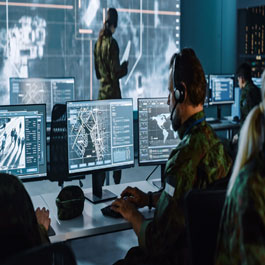
Surveillance has always been a cornerstone of defense strategy. IoT is now enhancing it through interconnected sensor networks and real-time intelligence gathering.
- Smart Sensors and Drones: IoT-enabled UAVs and ground sensors provide 24/7 monitoring of borders, critical infrastructure, and conflict zones. These devices transmit live data to command centers, improving decision-making speed.
- Enhanced Situational Awareness: IoT devices integrate satellite imagery, ground radar, and acoustic sensors into a unified system. This creates a comprehensive picture of troop movements, enemy activities, and environmental conditions.
- Wearable Technology: Soldiers equipped with IoT-based wearables can transmit real-time data on their location, health status, and stress levels. This helps commanders ensure troop safety and coordinate efficiently during missions.
- Cybersecurity and Counterintelligence: IoT systems, when combined with AI-driven analytics, can detect unusual patterns in digital and physical activities, strengthening counterintelligence and cyber defense operations.
Benefits and Challenges
Benefits:
- Faster decision-making with real-time data
- Improved operational efficiency and readiness
- Reduced risks for soldiers through automation
- Cost savings via predictive maintenance and optimized supply chains
Challenges:
- Cybersecurity Risks: More connected devices mean a larger attack surface for hackers.
- Data Overload: Handling massive amounts of data requires advanced analytics and secure storage.
- Interoperability: Integrating IoT across different military platforms and allied nations can be complex.
The Road Ahead
As defense forces continue to modernize, IoT will play a central role in the future of military operations. By combining IoT with artificial intelligence (AI), machine learning, and 5G connectivity, militaries can achieve unparalleled levels of efficiency and security. The vision is clear: a defense ecosystem where logistics are seamlessly managed, surveillance is continuous, and decisions are data-driven.
In an age where information dominance can define victory, IoT is not just a technological upgrade — it is a strategic necessity.